Aerial platform 2025
Discover here the aircraft present last year!
DASSAULT FALCON 50 M
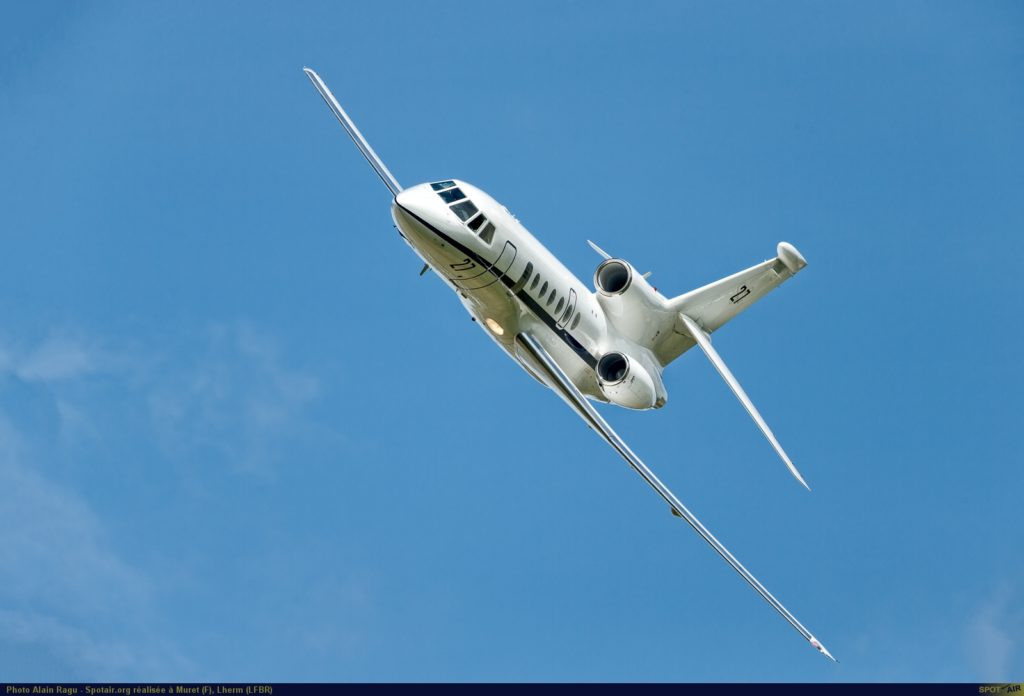
The Falcon 50M is the Marine version of the Falcon 50 turbojet. It can travel 10,000km in a single full tank of gas and this at more than 680 km/h and up to 13.7 km altitude. It is used by the French Navy for missions of protection of maritime spaces and rescue at sea.
- Empty weight : around 9 150 kg
- Maximum take-off weight : 18 300 kg
- Wingspan : 18,86 m
- Capacity : 3 to 5 crew members (mission configuration), up to 8 passengers (depending on mission)
- Range : around 5 700 km (3 100 nm)
- Production period : Falcon 50 developed in the 1970s, 50M version entered into service in the 1990s
Image credit : Alain Ragu – spotair.fr
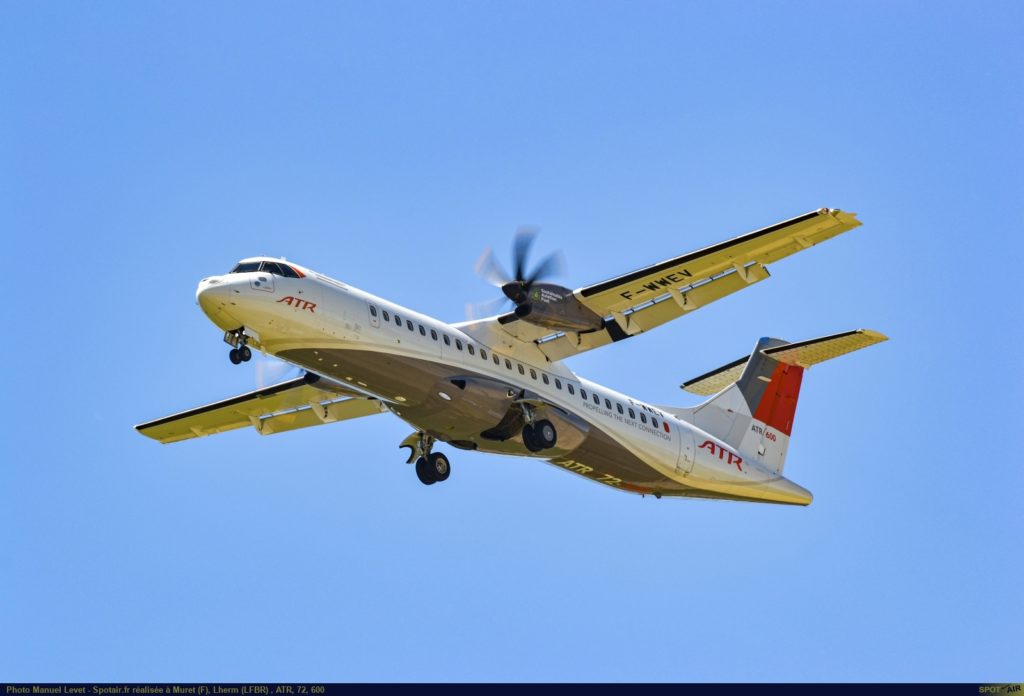
ATR 72-600
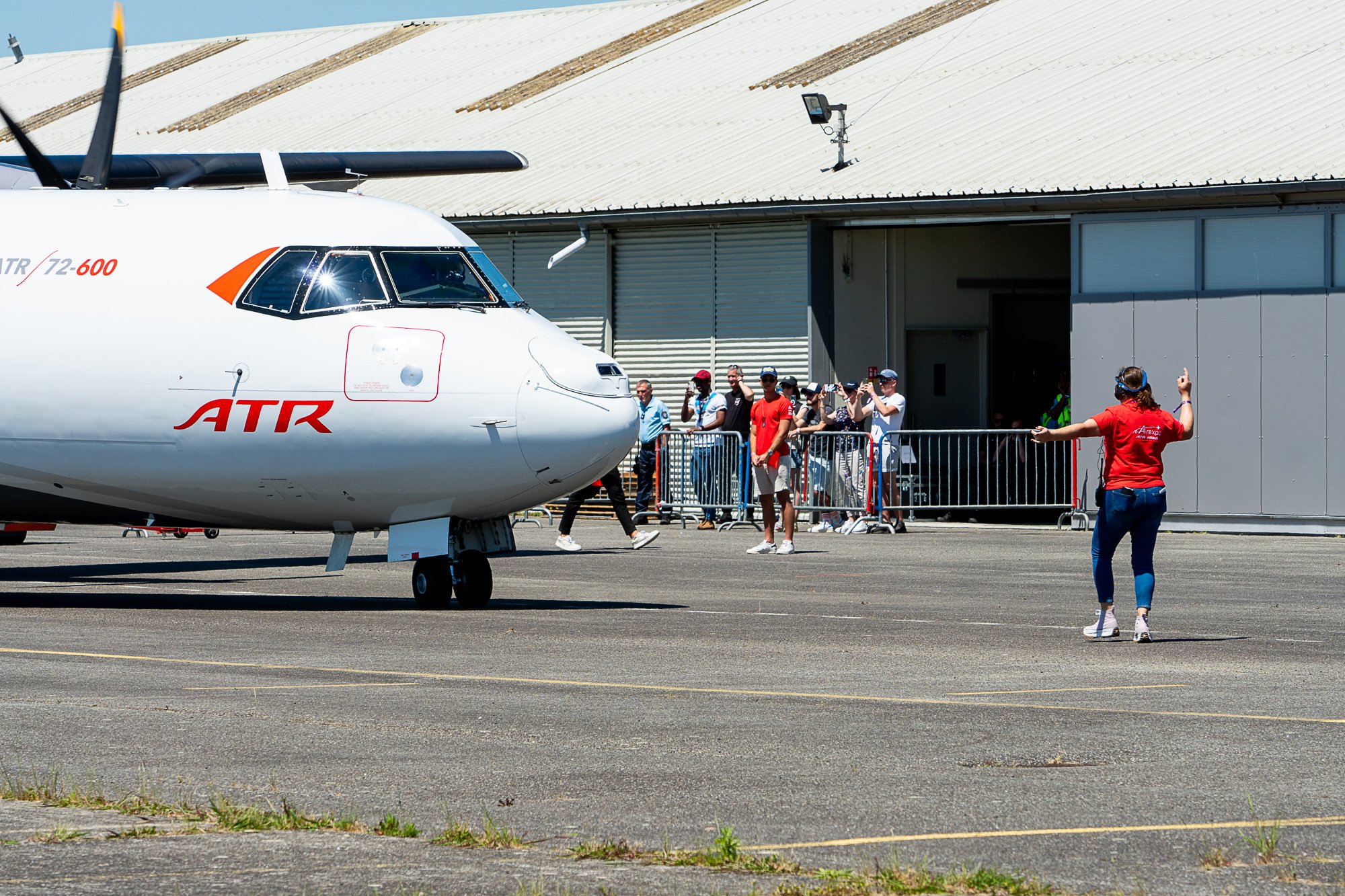
With a wingspan of more than 27 m and a cruising speed of 500 km/h, the ATR 72-600 is one of the best known regional aircraft, it can carry up to 78 passengers.
- Empty weight : around 13 000 kg
- Maximum take-off weight : 23 000 kg
- Wingspan : 27,05 m
- Capacity : up to 78 passengers (including crew: 2 pilots + 2 PNC typically)
- Range : about 1 665 km (900 nm) with full load
- Production period : Version developed in the 2000s, in production since 2010
Image credit : Manuel Levet – spotair.fr
EXTRA 330SC
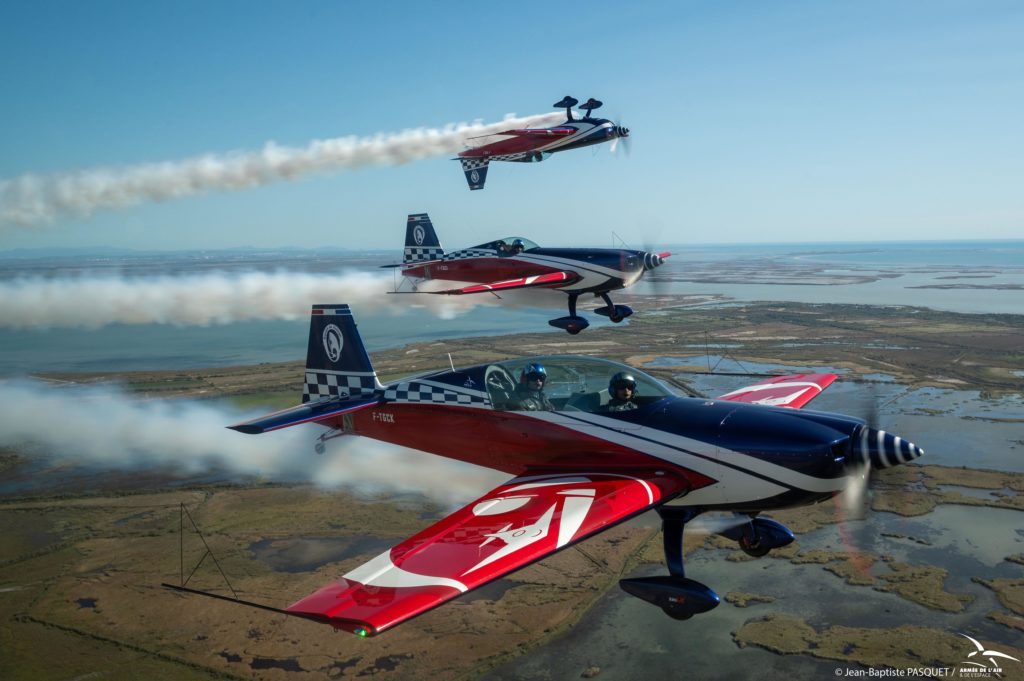
With an unladen mass of 585 kg, notably thanks to carbon fibre wings, and equipped with a 315 hp engine, the Extra 330SC is an exceptional aerobatic aircraft.
Its potential is fully exploited by the EVAAE pilots who are crowned world champions in aerobatics in 2022 and European champions in 2023!
- Weight:
- Empty: 589 kg
- At takeoff: 869 kg
- Wingspan: 7.5 m
- Capacity: 1 (single-seater)
- Production Period: Developed in the 2000s, in production since 2007
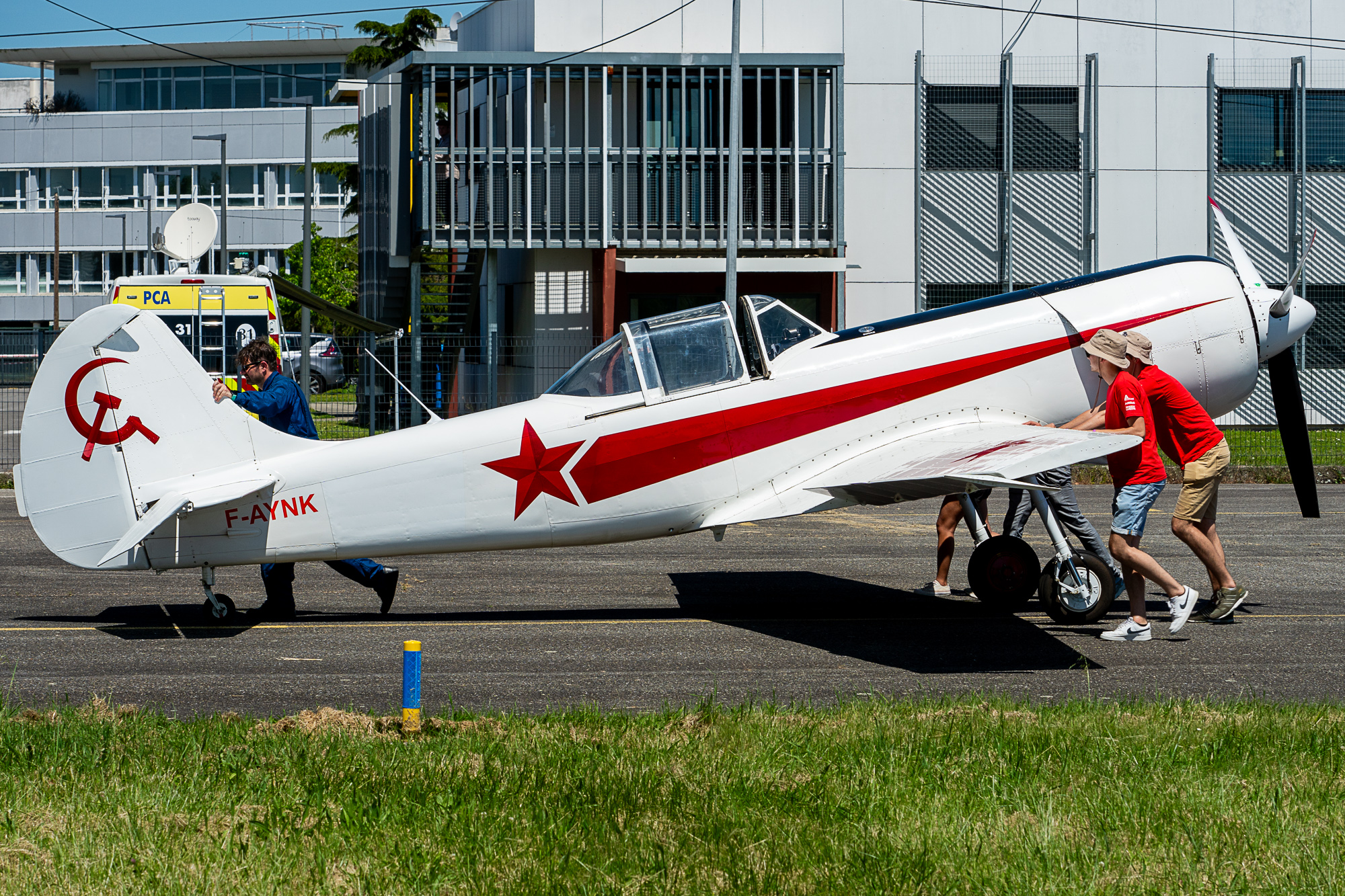
YAKOVLEV YAK50
The Yak-50 is a single-seat aerobatic and training aircraft of Soviet origin.
- Weight:
- Empty : 750 kg
- At takeoff : 950 kg
- Wingspan: 9.5 m
- Capacity: 1 (single-seater)
- Range: 500 km (270 nm)
- Production Period: Developed in the 1970s, produced from 1975 to 1986
Image credit : spotair.fr
MAX PLAN 205 BUSARD
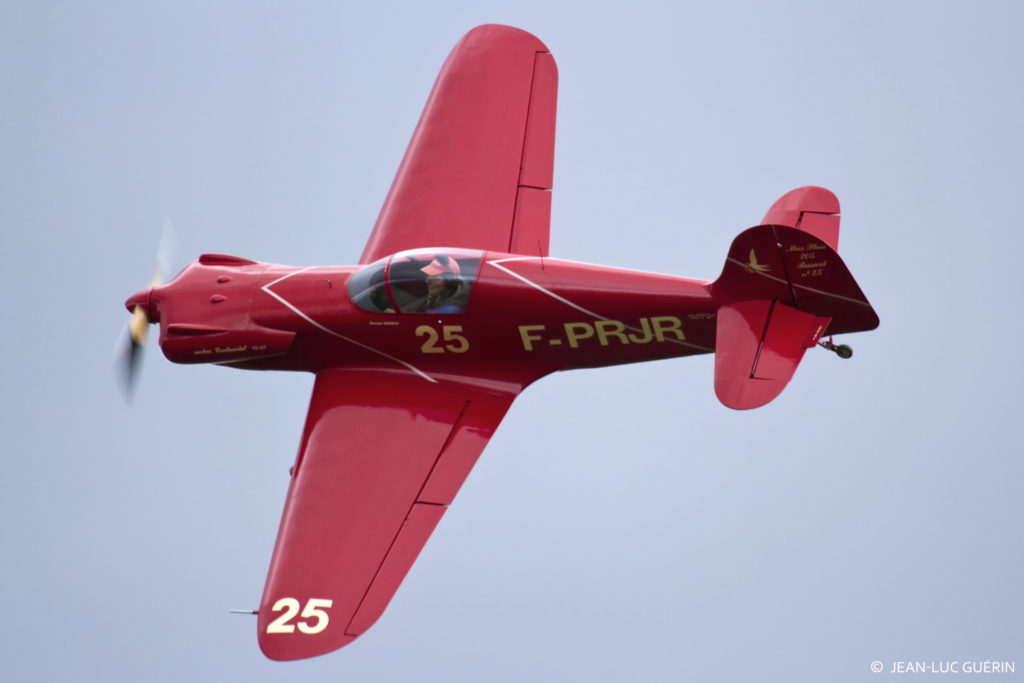
The Max Plan 205 is a French racing aircraft of which only the plans are sold. With an unladen mass of 300 kg and nearly 100 hp, it can reach 300 km/h.
- Weight:
- Empty : 300 kg
- At takeoff : 450 kg
- Capacity: 1 (single-seater)
- Production Period: Developed in the 1970s
Image credit : Jean-Luc Guérin
ENAC Training aircraft : DA40, DA42, TB20, BARON 58 et CAP 10
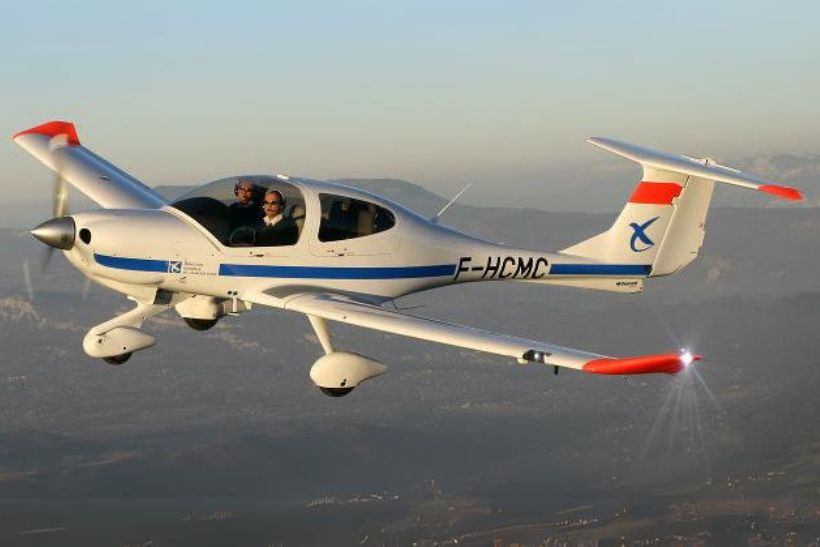
DIAMOND DA40
The Diamond DA40 and 42 are very versatile Austrian aircraft. They are appreciated as school aircraft by civilians and the military but also as tourist aircraft and taxi plane for professionals.
- Weight:
- Empty : 720 kg
- At takeoff : 1 150 kg
- Wingspan: 11.9 m
- Capacity: 4
- Range: 1,344 km (725 nm)
- Production Period: Developed in the 1990s, in production since 2000
DIAMOND DA42
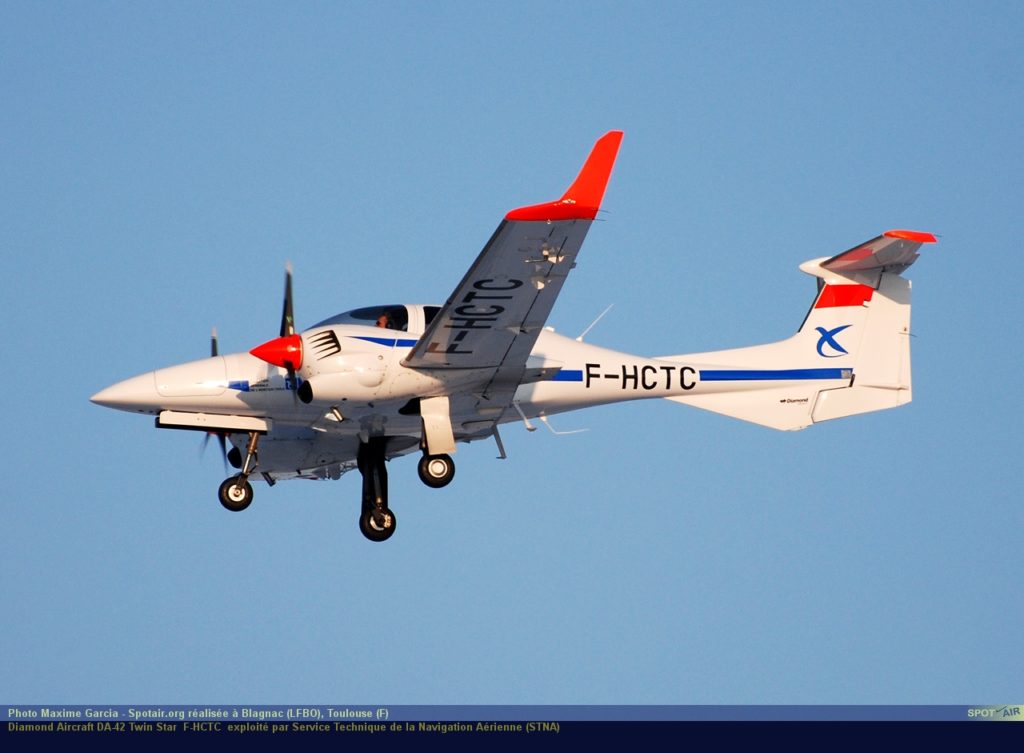
The DA42 was the first twin-engine propeller capable of operating on kerosene, which allows to fly for much cheaper!
- Empty weight : around 1 280 kg
- Maximum take-off weight : around 1 900 kg
- Wingspan : 13,42 m
- Capacity : 4 seats (2 pilots + 2 passengers)
- Range : around 2 000 km (1 080 nm)
- Production period : Developed in the 2000s, in production since 2004
Image credit : Maxime Garcia – spotair.fr
SOCATA TB20
The Socata TB20 is a French aircraft released in the 80s. Equipped with a 250 hp engine, it is prized for leisure or business trips.
- Weight:
- Empty : 900 kg
- At takeoff : 1 400 kg
- Wingspan: 9.7 m
- Capacity: 4-5
- Range: 1,560 km (842 nm)
- Production Period: Developed in the 1970s, produced since 1981

BEECHCRAFT BARON 58
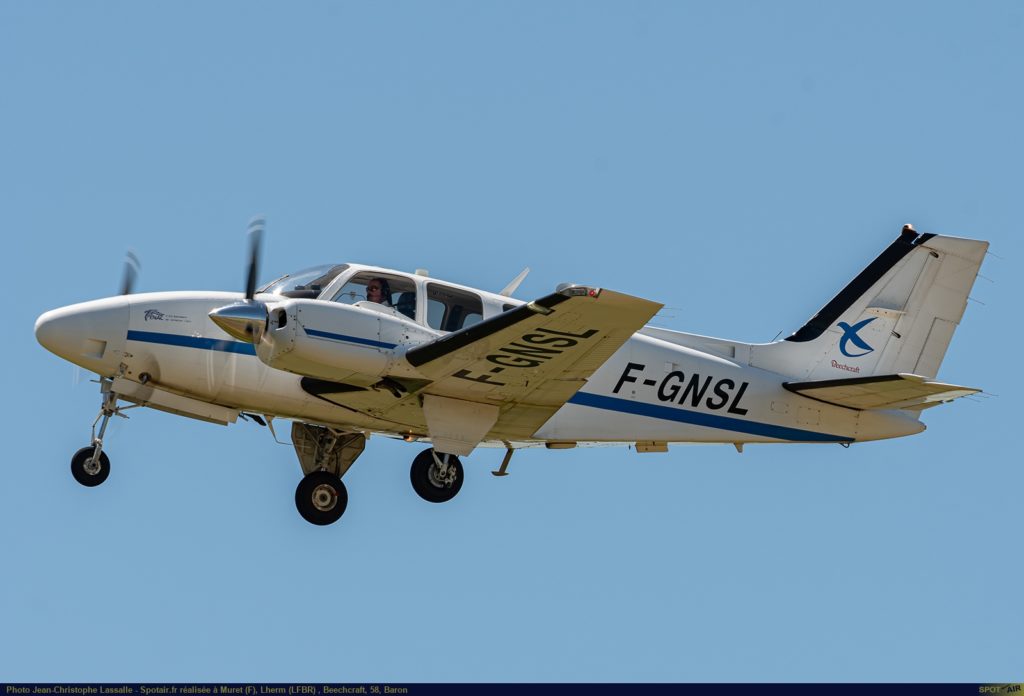
The Beechcraft Model 58 Baron is a spacious 6-seater bimotor popular for business trips. There is even a pressurized variant.
- Empty weight : around 2 180 kg
- Maximum take-off weight : around 2 495 kg
- Wingspan : 11,53 m
- Capacity : 6 seats (2 pilots + 4 passengers)
- Range : around 1 830 km (990 nm)
- Production period : Developed in the 1960s, produced from 1969 and still in production (modernized models)
Image credit : Jean-Christophe Lassalle – spotair.fr
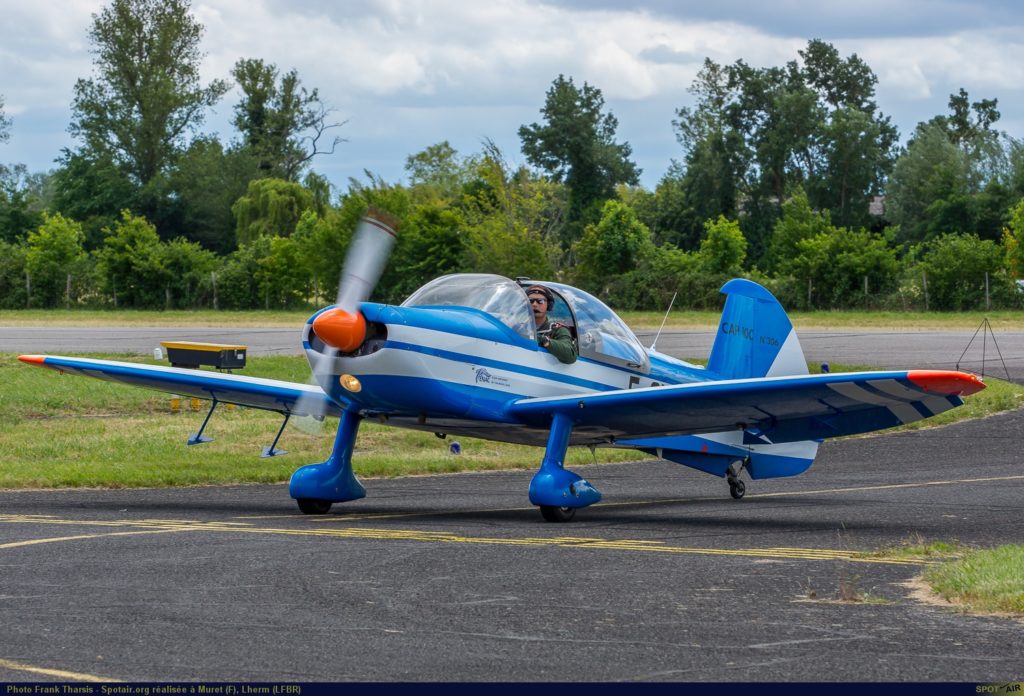
MUDRY CAP 10
Built in 1970 by Auguste Mudry, the Cap10 is the quintessential French aerobatic aircraft. Versatile, it allows the discovery of the classic train, the study of warnings for young pilots, the learning of aerobatics and the practice of the latter in two-seater competition.
- Empty weight : around 720 kg
- Maximum take-off weight : around 990 kg
- Wingspan : 8,06 m
- Capacity : 2 seats (tandem two-seater)
- Range : around 720 km (390 nm)
- Production period : Developed in the 1960s, produced from 1970
Image credit : Frank Tharsis – spotair.fr
EUROCOPTER EC-120
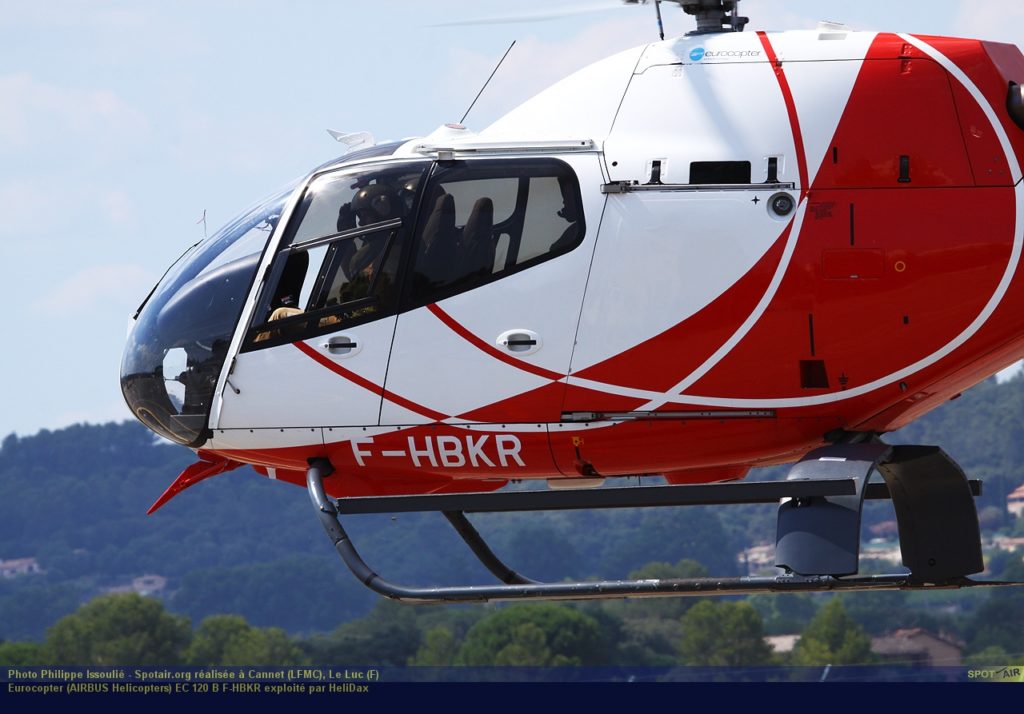
The Calliope (the military designation of the EC 120) is a light transport single-turbine helicopter (6 passengers), used by the ALAT to train helicopter pilots. It is also used by the US police and customs.
- Empty weight : around 991 kg
- Maximum take-off weight : 1 715 kg
- Main rotor span : 10.00 m (diameter)
- Capacity : 5 seats (1 pilot + 4 passengers)
- Range : around 710 km (380 nm)
- Production period : Developed in the 1990s, produced from 1997 to 2017
Photo credit: Philippe Issoulié – spotair.fr
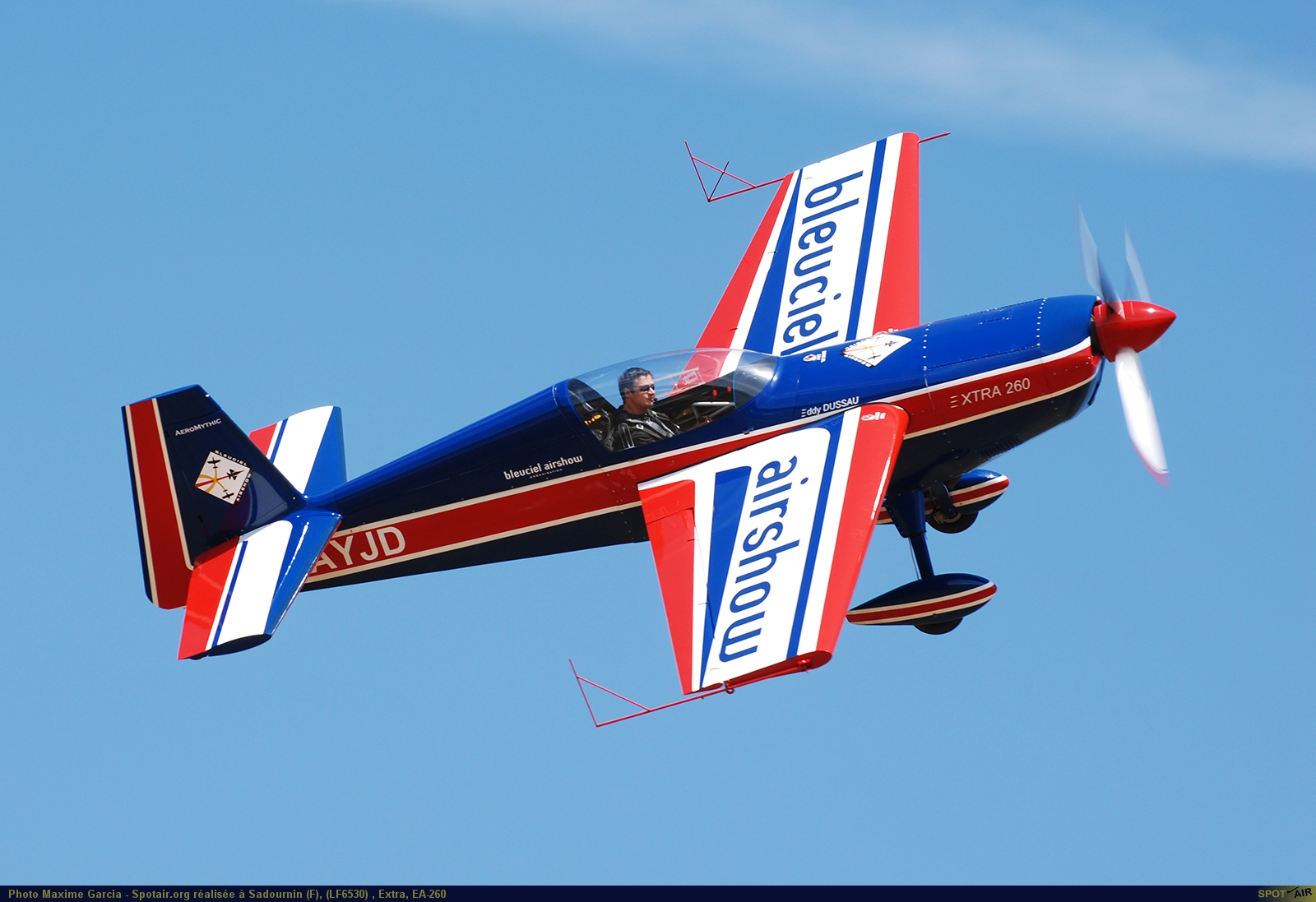
EXTRA 260
The Extra 260 is a very rare aerobatic aircraft produced in the 80s and 90s, there are only 2 left in the world! The pilot, Eddy DUSSAU, is also a rare gem, he has accumulated 12,000h of flight and was 6 times consecutive champion of France in the Unlimited category.
- Capacity: 1 (single-seater)
- Production Period: Developed in the 1980s, first flight in 1986
Image credit : Maxime Garcia – spotair.fr
GRUMMAN TRACKER « FIRECAT »
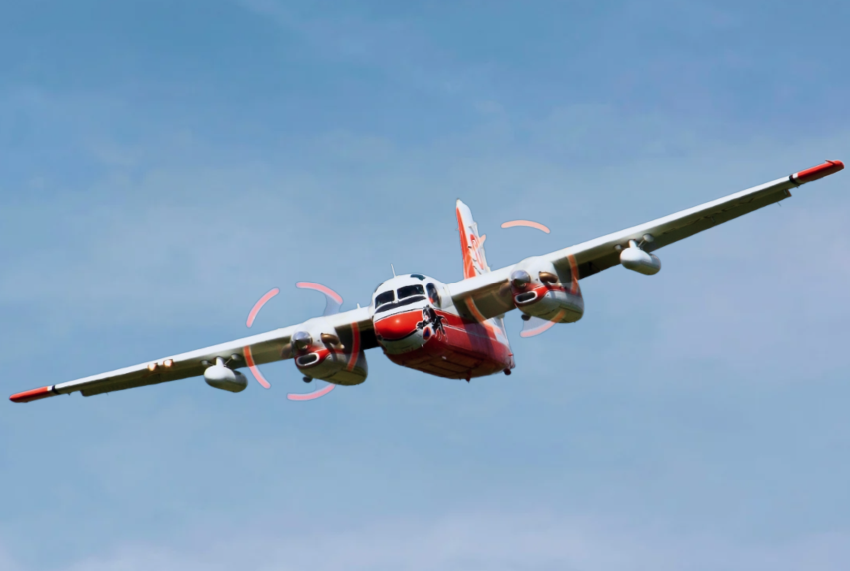
The Tracker Firecat is a derivative of the anti-submarine warfare device Grumman S-2 Tracker, originally built for the US Navy and whose first flight dates back to December 1952.
- Wingspan: 22.1 m
- Capacity: 2 (for the Firecat version)
- Production Period: Developed in the 1950s, converted to Firecat in the 1970s
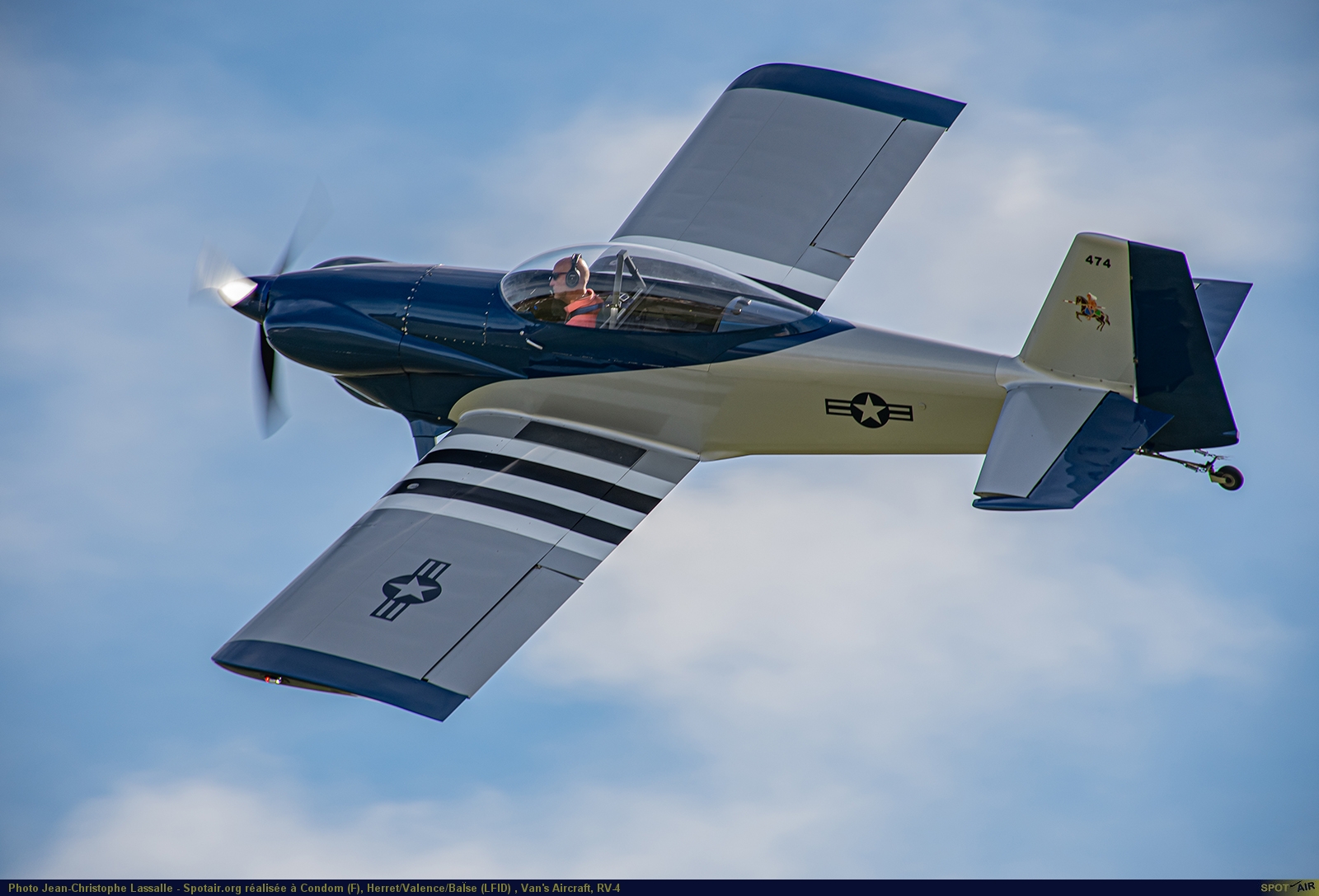
VAN’S RV-4
The RV-4 is a very versatile American kit aircraft. It can fly from 90 to 280 km/h and, if its engine is equipped for, it is capable of performing various aerobatic maneuvers.
- Weight:
- Empty: 410-415 kg
- At takeoff: 680 kg
- Capacity: 2 (tandem two-seater)
- Range: 1271 km, is able to cross half of North America in one day
- Production Period: Developed in the 1970s, first flight in 1979
Image credit : Jean-Christophe Lassalle – spotair.fr
The Coyote Patrol is a local patrol operating on 3 types of aircraft, a Dynamic WT9, a Mudry Cap 10 and two Tecnam P2002.
DYNAMIC WT9
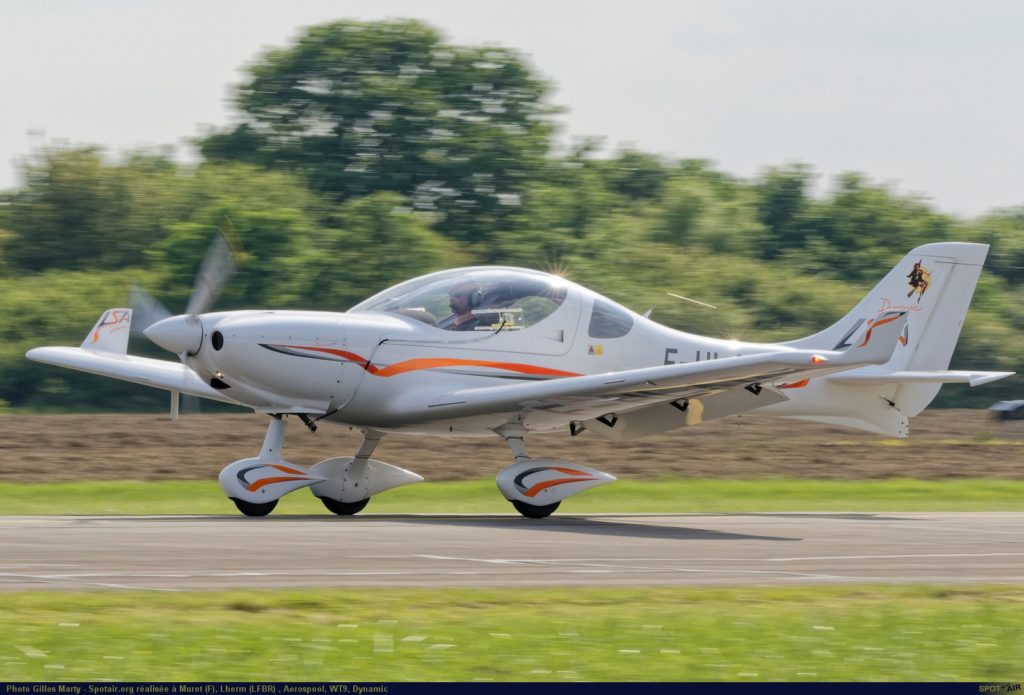
- Empty weight : around 297 kg
- Maximum take-off weight : 600 kg
- Wingspan : 8,44 m
- Capacity : 2 seats (two-seater side by side)
- Range : around 1,575 km (850 nm)
- Production period : Developed in the 2000s, still in production
Image credit : Gilles Marty – spotair.fr
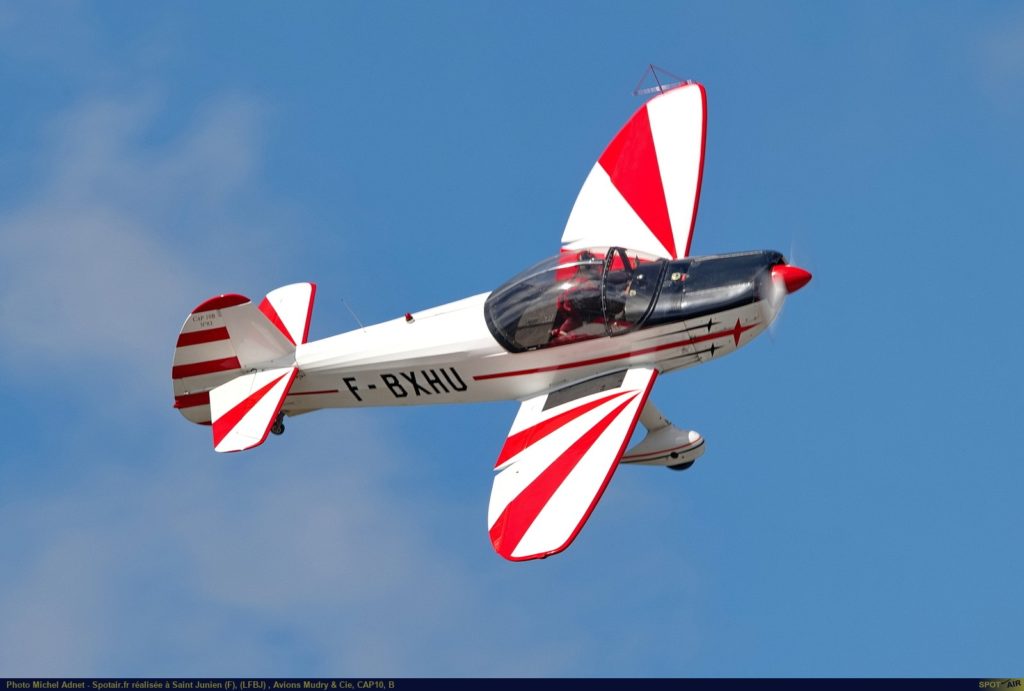
MUDRY CAP 10
- Empty weight : around 720 kg
- Maximum take-off weight : 990 kg
- Wingspan : 8,06 m
- Capacity : 2 seats (tandem two-seater)
- Range : around 720 km (390 nm)
- Production period : Developed in the 1960s, produced from 1970
Image credit : Michel Adnet – spotair.fr
TECNAM P2002
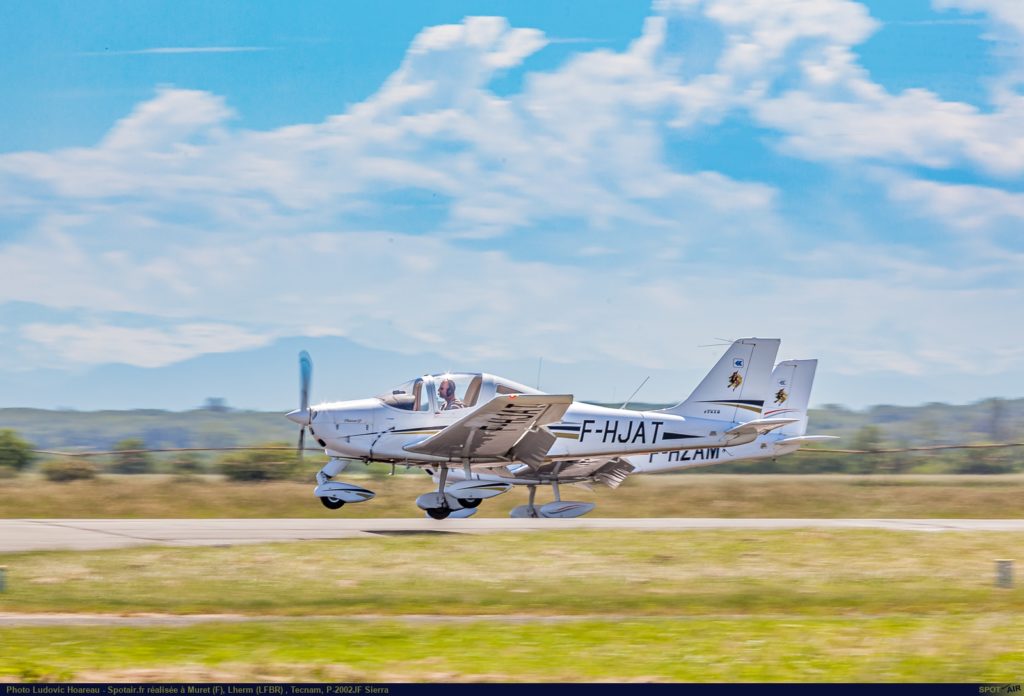
- Empty weight : around 400 kg
- Maximum take-off weight : 580 kg
- Wingspan : 8,6 m
- Capacity : 2 seats (two-seater side by side)
- Range : around 1 050 km (570 nm)
- Production period : Developed in the 2000s, still in production
Image credit : Ludovic Hoareau – spotair.fr
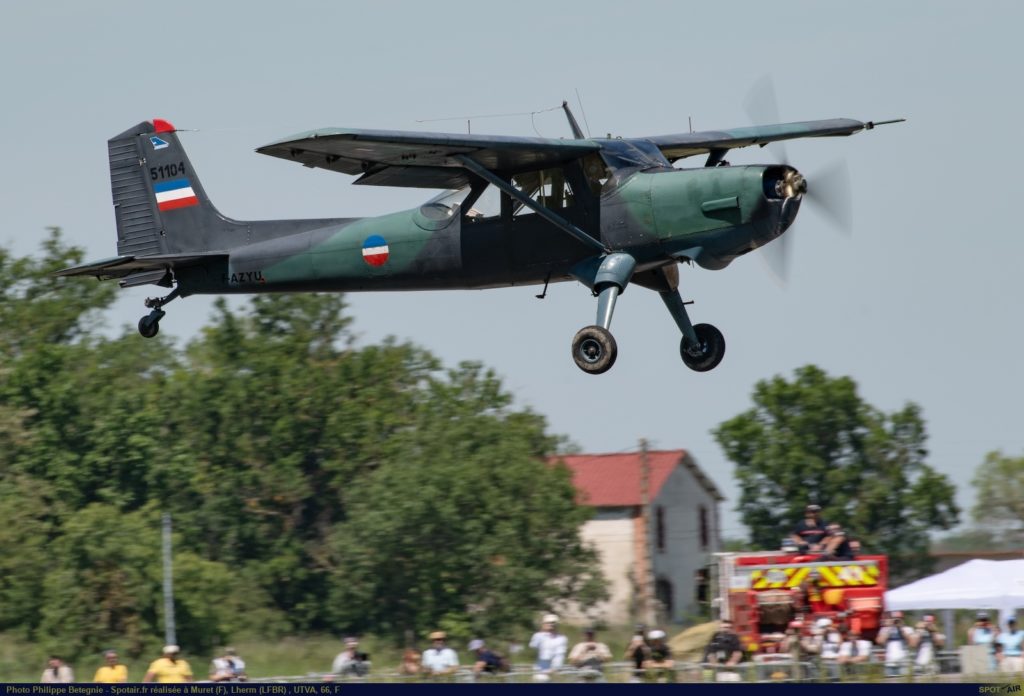
UTVA 66
The UTVA 66 is a military aircraft produced in the late 1960s by the Yugoslav manufacturer UTVA, to the tune of a hundred examples. Used for liaison, training, observation and transport missions, they were withdrawn from service between 1995 and 1999 after the war in Bosnia-Herzegovina. Most are bought by private individuals and are used for leisure or parachute transportation in many countries.
- Empty weight : around 1 000 kg
- Maximum take-off weight : 1 500 kg
- Wingspan : 12,28 m
- Capacity : 3 seats (1 pilot + 2 passengers or operators)
- Range : around 850 km (460 nm)
- Production period : Developed in the 1960s, produced from 1966
Photo credit: Philippe Betegnie – spotair.fr
BOEING PT17 STEARMAN
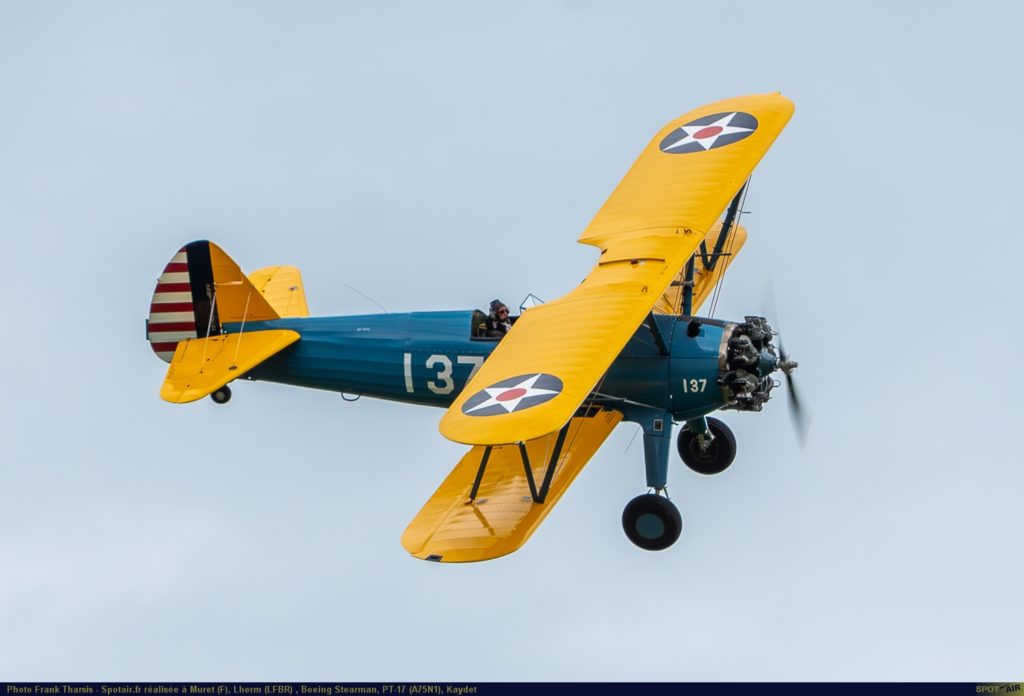
The Boeing PT17 Stearman is a biplane that was used as a military training aircraft by the American army in the 1930s and 1940s.
- Empty weight : around 880 kg
- Maximum take-off weight : around 1 230 kg
- Wingspan : 9,81 m
- Capacity : 2 seats (tandem two-seater)
- Range : around 505 km (273 nm)
- Production period : Developed in the 1930s, produced from 1934 to 1945
Image credit : Frank Tharsis – spotair.fr
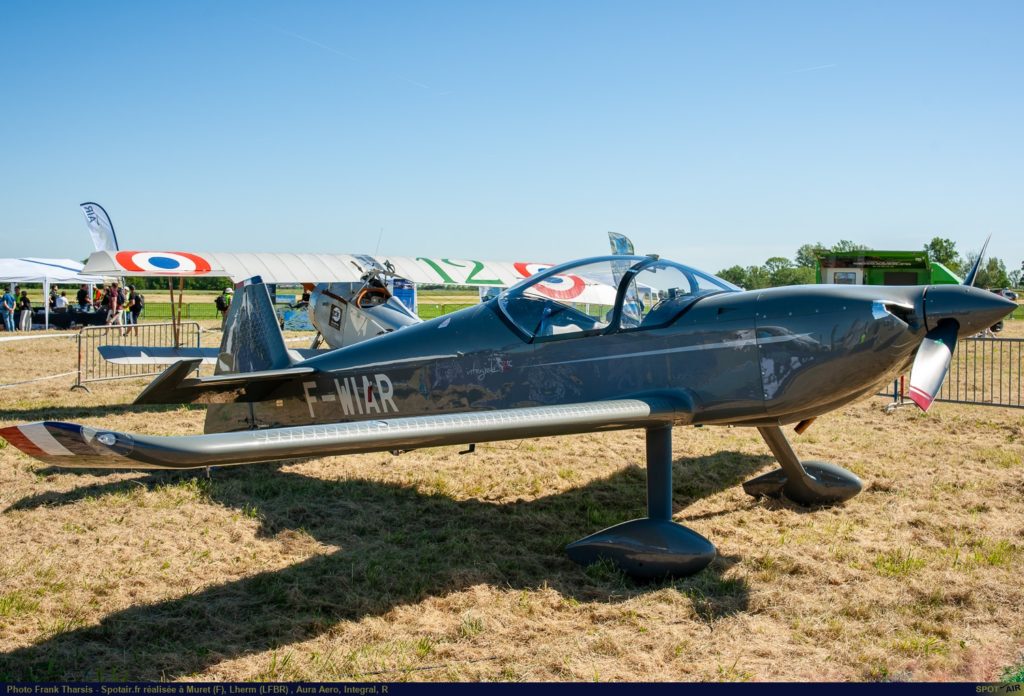
AURA AERO INTEGRAL R
The Integral R, Aura Aero’s latest creation, is a wooden and carbon aerobatic aircraft intended for training, leisure aerobatics or competition.
The Intégral R was certified in December 2024, so Airexpo will be the plane’s first flight appearance at an airshow!
- Empty weight : around 870 kg
- Maximum take-off weight : 1 200 kg
- Wingspan : 8,10 m
- Capacity : 2 seats (tandem two-seater)
- Range : around 1 200 km (650 nm)
- Production period : Developed from the late 2010s, still in production since 2021
Image credit : Frank Tharsis – spotair.fr
NORTH AMERICAN OV10 BRONCO
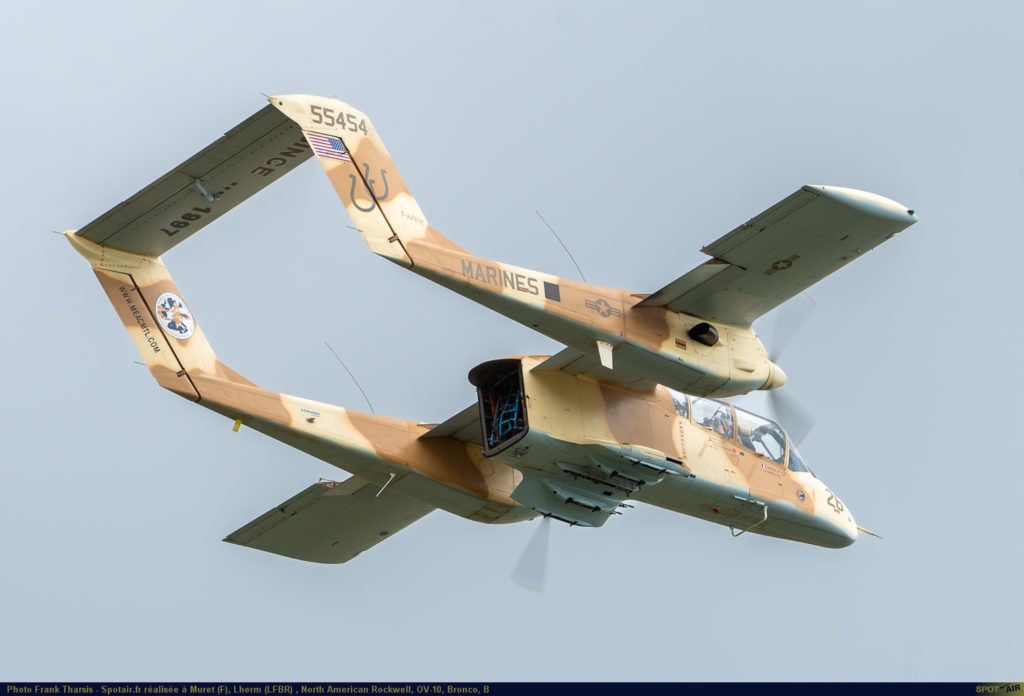
The Bronco is a plane commanded by the US Navy to be used for reconnaissance, fire support, and anti-guerrilla warfare. Equipped with 4 machine guns, it can carry up to 1600 kg of external loads, such as bombs, missiles or cannons. Deployed for the first time in 1967 during the Vietnam war, it is still active within NASA for research or for fire reconnaissance in California.
- Empty weight : around 3 880 kg
- Maximum take-off weight : around 6 600 kg
- Wingspan : 12,19 m
- Capacity : 2 seats (tandem two-seater), with space for 2 additional observers at the rear according to version
- Range : around 920 km (500 nm)
- Production period : Developed in the 1960s, produced from 1965 to 1986
Image credit : Frank Tharsis – spotair.fr
WARBIRD DISPLAY TEAM
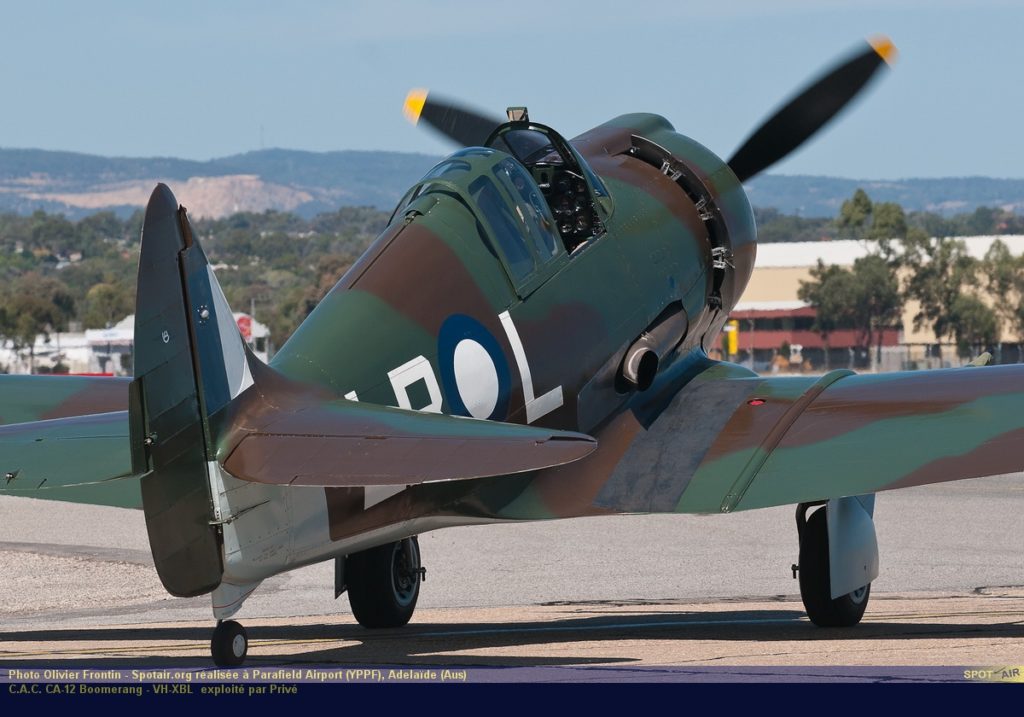
BOOMERANG CA-12
The CA-12 Boomerang, the first fighter aircraft designed and manufactured in Australia, was developed to counter the Japanese threat. If he fought little in the air, he excelled in ground attack and reconnaissance.
- Empty weight : around 2 175 kg
- Maximum take-off weight : around 3 130 kg
- Wingspan : 11,0 m
- Capacity : 1 seat (single-seater)
- Range : around 930 km (500 nm)
- Production period : Developed urgently in the early 1940s, produced from 1942 to 1945
Image credit : Olivier Frontin – spotair.fr
YOKOVLEV YAK-3
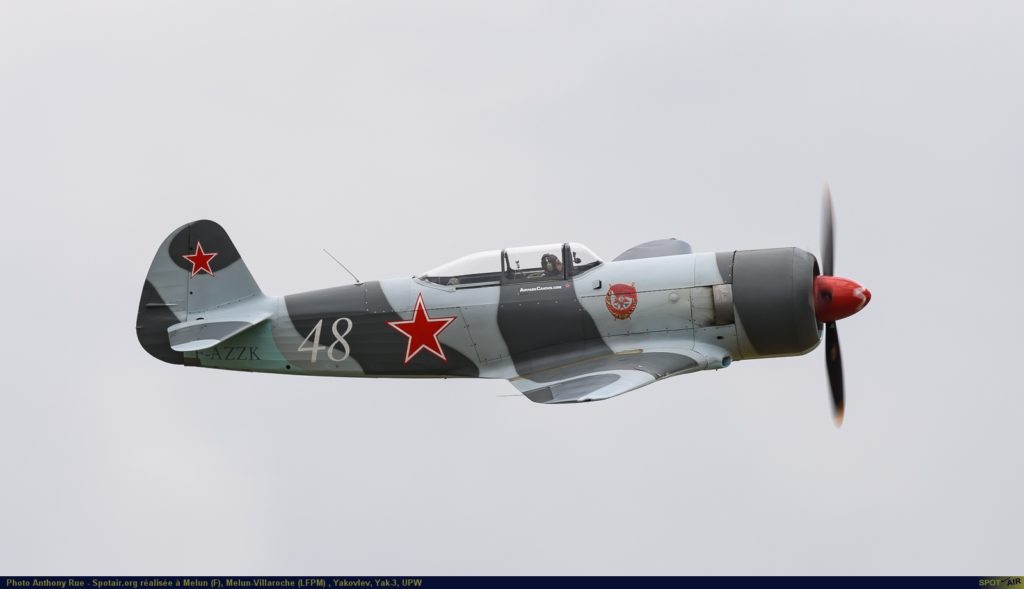
The Yak 3, an ultra-maneuverable Soviet fighter, was designed to outperform German aircraft during World War II. Light, fast and reserved for the best pilots, it was also used by the famous Normandy-Niemen squadron.
- Empty weight : around 2 105 kg
- Maximum take-off weight : around 2 690 kg
- Wingspan : 9,20 m
- Capacity : 1 seat (single-seater)
- Range : around 650 km (350 nm)
- Production period : Developed in the 1940s, produced from 1944 to 1946
Image credit : Anthony Rue – spotair.fr
Avions SUPAERO : P68 et AT01
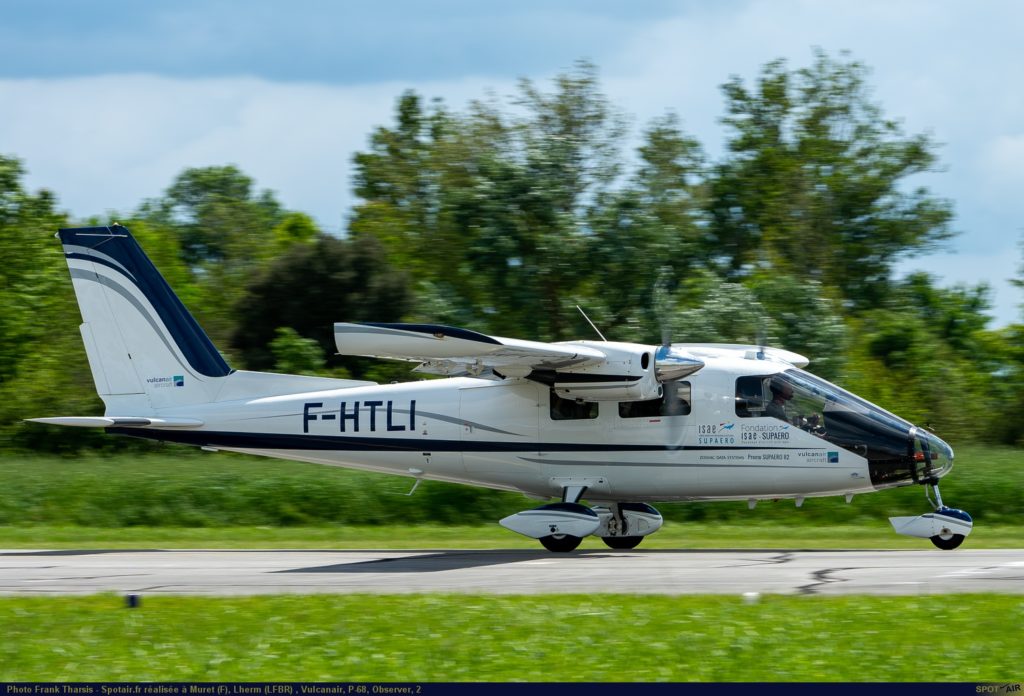
VULCANAIR P68 Observer 2
The Vulcanair P68 Observer 2 is a light observation aircraft. It is equipped with two piston engines and can generate 400 hp. Its transparent nose makes it very convenient for observation and that is why it is used by several police forces worldwide. It is used in Supaero as a flying laboratory.
- Empty weight : around 1 450 kg
- Maximum take-off weight : around 2 130 kg
- Wingspan : 12,00 m
- Capacity : 6 places (2 pilotes + 4 passagers, selon configuration)
- Range : around 1 400 km (750 nm)
- Production period : Developed in the 1970s, in production since 1972 (different versions still produced)
Image credit : Frank Tharsis – spotair.fr
AQUILA AT01
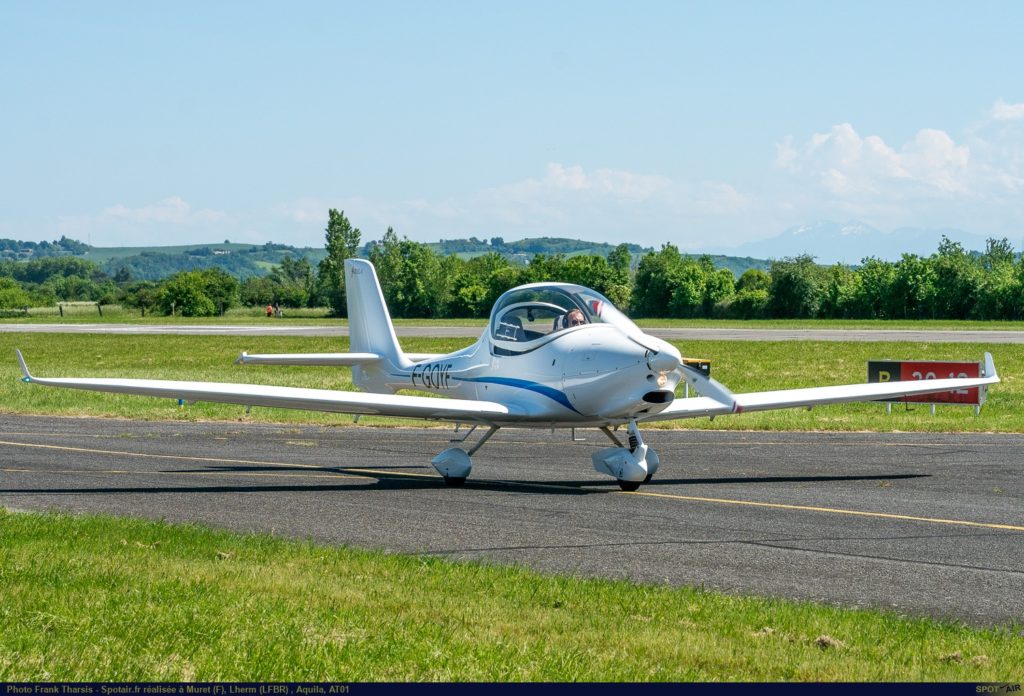
L'Aquila AT01 is a light two-seater single engine designed for flight training. Barely exceeding 500 kg empty, it can land and take off on very short runways (400m and 300m respectively) which makes it ideal for flying clubs.
- Empty weight : around 520 kg
- Maximum take-off weight : 750 kg
- Wingspan : 8,34 m
- Capacity : 2 seats (two-seater side by side)
- Range : around 950 km (510 nm)
- Production period : Developed in the 1990s, produced since 1997
Image credit : Frank Tharsis – spotair.fr
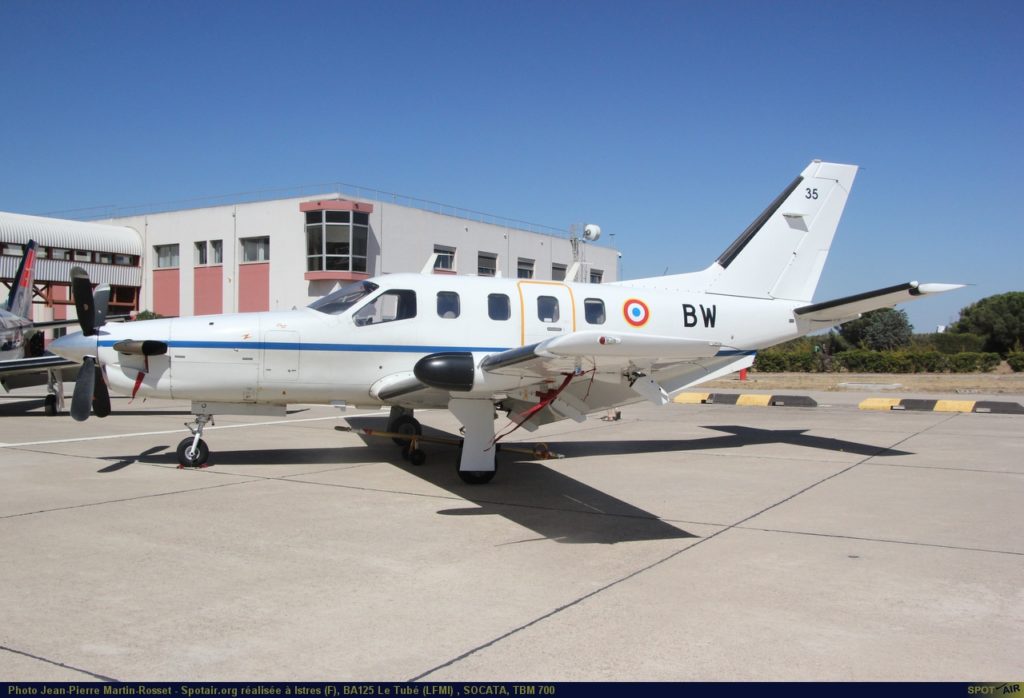
DAHER TBM700
The TBM 700 is a light turboprop transport aircraft of 700 hp. It is mainly used in the ALAT for the transport of authorities, and generally can carry 6 people.
- Empty weight : around 1 900 kg
- Maximum take-off weight : 2 850 kg
- Wingspan : 12,68 m
- Capacity : 6 seats (1 pilot + 5 passengers)
- Range : around 2 800 km (1 500 nm)
- Production period : Developed in the late 1980s, produced from 1990 to 2005
Photo credit: Jean-Pierre Martin-Rosset – spotair.fr
MORANE SAULNIER MS733
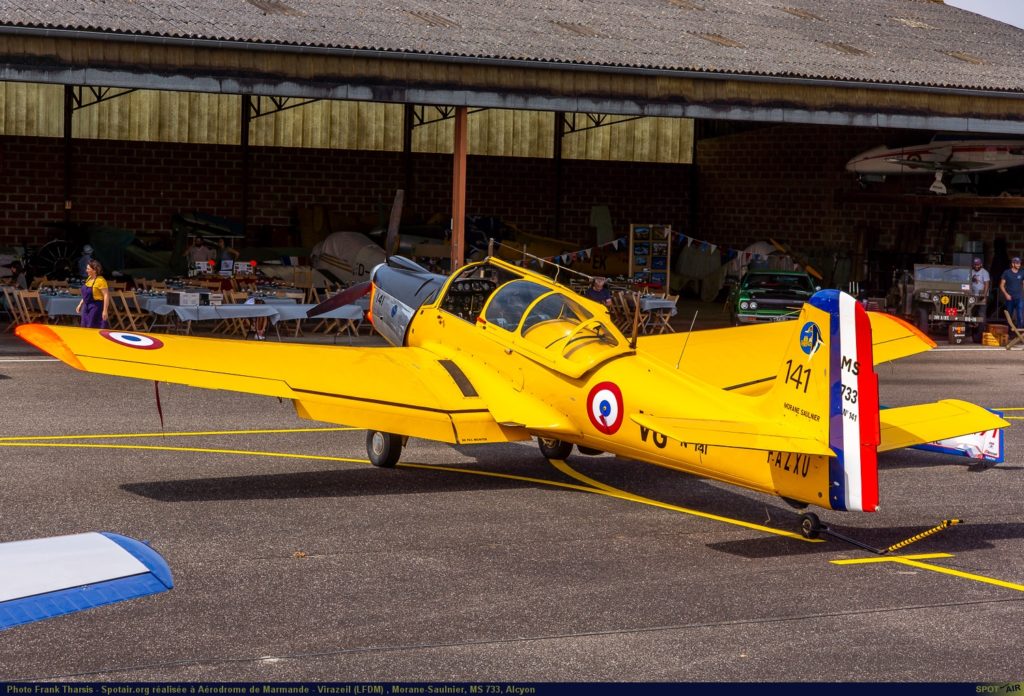
The Morane-Saulnier MS.733 Alcyon is a French training aircraft that first flew in 1951. The air force ordered 200 of them, including 40 for the naval aviation. It was used during the Algerian war, notably as an anti-guerrilla aircraft.
- Empty weight : around 1 020 kg
- Maximum take-off weight : around 1 500 kg
- Wingspan : 10,46 m
- Capacity : 3 seats (1 pilot + 2 passengers or students)
- Range : around 1 000 km (540 nm)
- Production period : Developed in the late 1940s, produced from 1951 to 1959
Image credit : Frank Tharsis – spotair.fr
SOCATA TB-30
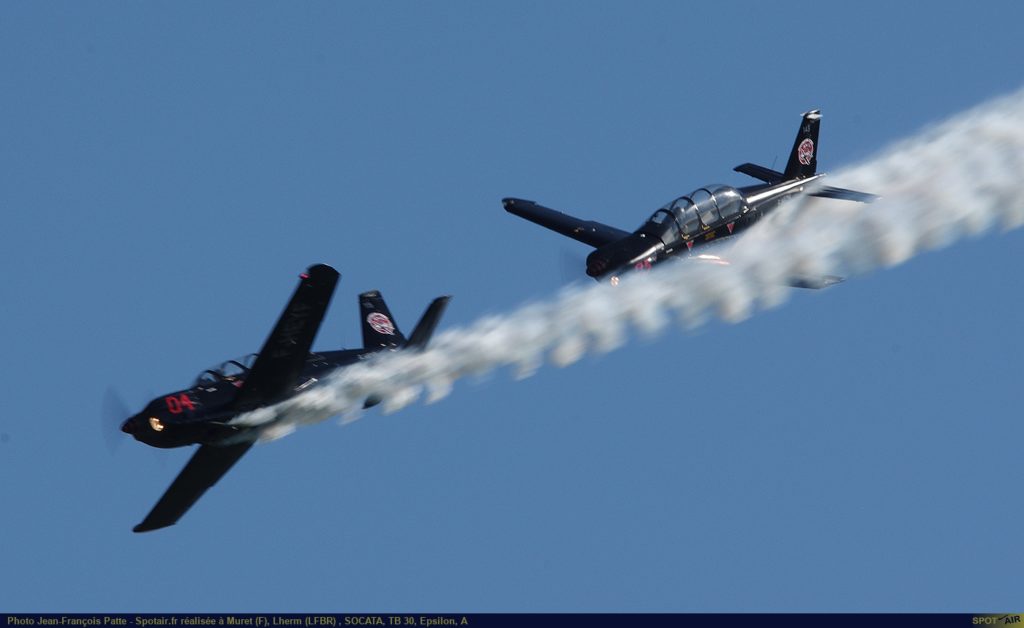
The TB-30 is a single-engine training aircraft intended for army pilot training. He has an empty weight of just 870 kg which allows him to perform acrobatic maneuvers up to 5g, and this with a pilot and a passenger. It is used here by Vertical Flight Experience for aerobatics and close formation flying.
- Empty weight : around 1 050 kg
- Maximum take-off weight : around 1 300 kg
- Wingspan : 7,92 m
- Capacity : 2 seats (tandem two-seater)
- Range : around 1 100 km (600 nm)
- Production period : Developed in the late 1970s, produced from 1980 to 1989
Image credit : Jean-François Patte – spotair.fr
PILATUS PC-6
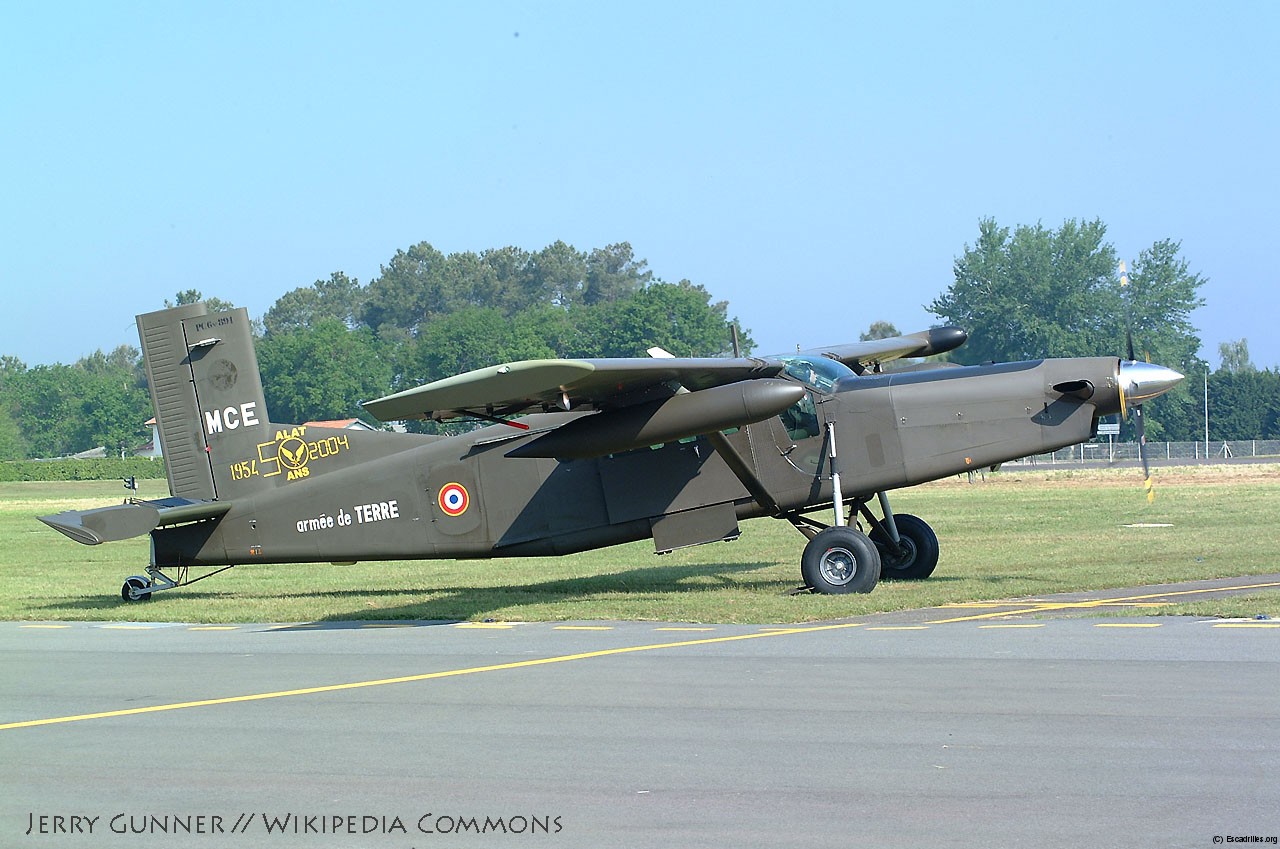
Light transport monoturboprop, the PC6 began its career in 1961. Used mainly for skydiving, it is widely used by both the armed forces and the civilian sector.
- Empty weight : about 1,330 kg (turboprop version)
- Maximum take-off weight : around 2 800 kg
- Wingspan : 15,87 m
- Capacity : 1 pilot + up to 10 passengers or freight equivalent
- Range : around 1 480 km (800 nm)
- Production period : Developed in the 1950s, produced from 1959 to 2019
NORTH AMERICAN AT6-D
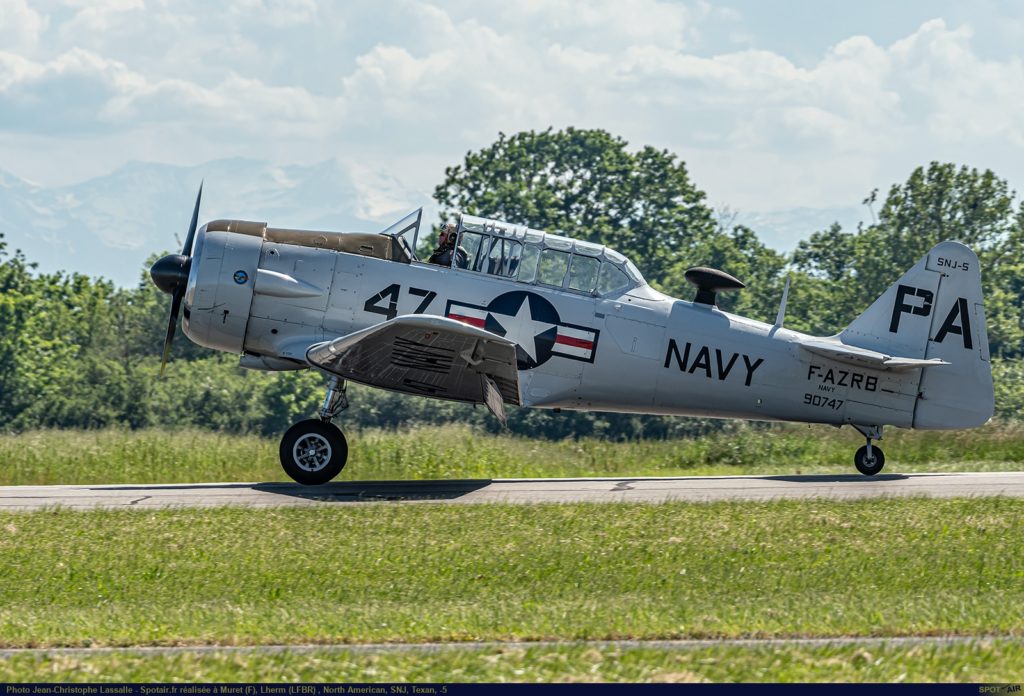
The North American T-6 “Texan” is the standard training device for fighter pilots of the Allied nations during the Second World War. It was produced in more than 15,400 examples and even served as a light fire support aircraft. Equipped with a radial engine from Pratt & Whitney, it has a remarkable power of 550 hp.
- Empty weight : around 1 880 kg
- Maximum take-off weight : around 2 550 kg
- Wingspan : 12,81 m
- Capacity : 2 seats (tandem two-seater)
- Range : around 1 150 km (620 nm)
- Production period : Developed in the 1930s, produced from 1935 to 1954 (T-6 versions, Harvard, etc.)
MDM Swift S-1
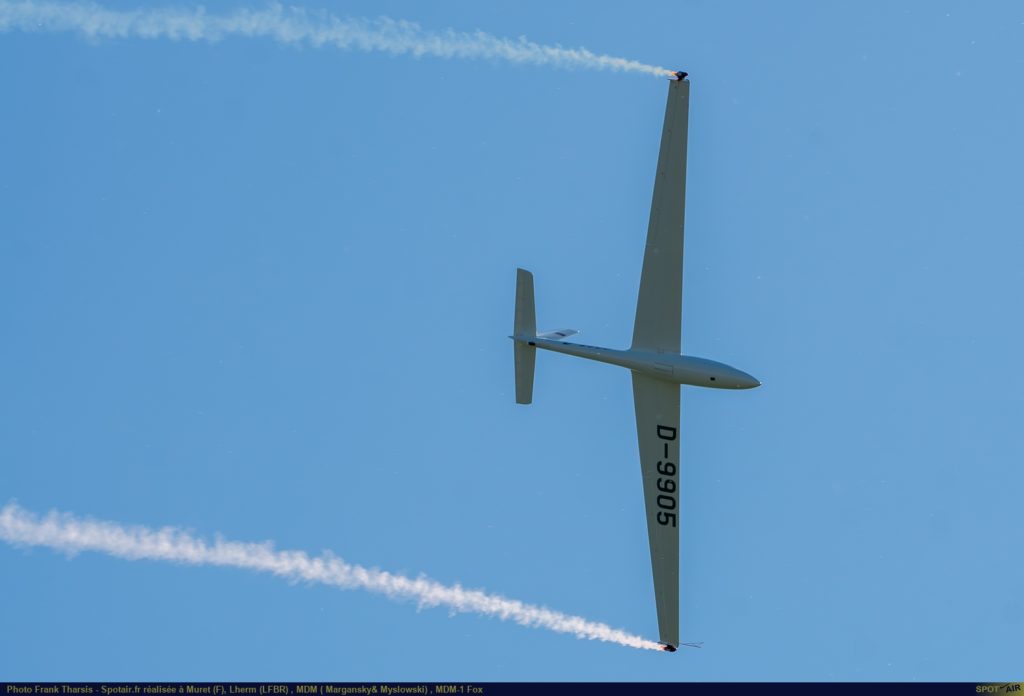
The Margański & Mysłowski Swift S-1 is a '90s aerobatic glider designed for extreme acrobatics. Thanks to its fiberglass fuselage and composite structure, it can handle maneuvers up to +10g! At the controls: Nicolas Honnons, French champion in glider aerobatics in his spare time, ready to push the limits of the sky!
- Empty weight : around 290 kg
- Maximum take-off weight : around 570 kg
- Wingspan : 13,20 m
- Capacity : 1 seat (single-seater)
- Range : (Glider – depends on conditions; maximum finesse approx. 38:1 at 110 km/h)
- Production period : Developed in the 1990s, produced since 1991
Image credit : Frank Tharsis – spotair.fr